I may earn a commission at no extra cost to you. #ad
The Savage Recovery Manual: A Free Guide to Optimizing High-Intensity Gains
Jump to Section
You don't get stronger in the gym. You get stronger while you sleep, while you eat, and while you rest. High-intensity training acts as the stimulus—it's the "savage" demand you place on your body—but your results are entirely dictated by your ability to recover from that demand. If you're smashing personal records in the weight room but neglecting your recovery protocol, you are leaving massive gains on the table and inviting injury to the party.
This manual breaks down the essential pillars of recovery designed specifically for athletes who push their limits. We aren't talking about "taking a day off" to sit on the couch; we're talking about an aggressive, systematic approach to physiological restoration.
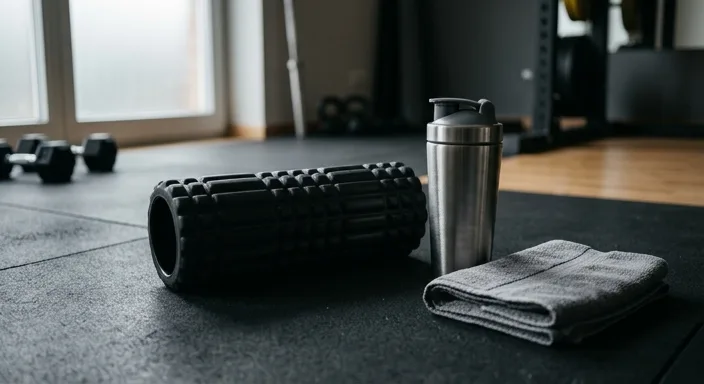
The Physiology of Recovery
When you perform high-intensity interval training (HIIT), heavy lifting, or explosive plyometrics, you create micro-tears in your muscle fibers and deplete your glycogen stores. More importantly, you place a massive tax on your Central Nervous System (CNS). Recovery is the process of returning these systems to homeostasis and then "super-compensating"—building back stronger than before.
- Protein Synthesis: The process where your body repairs damaged muscle proteins. This peaks 24–48 hours post-workout.
- Glycogen Replenishment: Restoring the glucose stored in your muscles that fuels high-intensity bursts.
- Neurological Restoration: Allowing the neurotransmitters and neurons that fire your muscles to return to full capacity.
Strategic Nutrition for Repair
Fueling for recovery is different from fueling for performance. Post-workout, your body is in a primed state to shuttle nutrients into the muscle cells. To optimize gains, you need a combination of fast-acting carbohydrates and high-quality protein.
The Post-Workout Window: While the "30-minute anabolic window" is largely exaggerated, getting a meal within 2 hours of a savage session is critical. Aim for 0.2g to 0.4g of protein per pound of body weight and 0.5g to 1g of carbohydrates per pound of body weight, depending on the intensity of the session.
Micronutrients: Don't ignore Magnesium and Zinc. These minerals are vital for muscle relaxation and testosterone production, both of which are depleted during intense training cycles.
Sleep: The Non-Negotiable Foundation
If you aren't sleeping 7–9 hours a night, you aren't training to your full potential. Sleep is when the vast majority of Growth Hormone (GH) is released. During deep sleep (REM and slow-wave sleep), your body focuses almost exclusively on tissue repair and cognitive processing.
To optimize sleep for high-intensity recovery:
- Maintain a cool room temperature (around 65°F or 18°C).
- Eliminate blue light 60 minutes before bed to allow melatonin production.
- Keep a consistent wake/sleep schedule, even on weekends.
Active Recovery vs. Complete Rest
Complete rest days are necessary when CNS fatigue is high, but "Active Recovery" is often superior for muscle soreness (DOMS). Low-intensity movement increases blood flow to the damaged tissues without adding further stress.
Effective Active Recovery Methods:
- 20–30 minutes of Zone 2 cardio (walking or light cycling).
- Flow-based yoga or dynamic mobility work.
- Swimming at a leisurely pace.
The goal is to get the heart rate up slightly and move the joints through a full range of motion, flushing out metabolic waste products like lactic acid.
Monitoring Overtraining and CNS Fatigue
Recovery is subjective. What works for a 20-year-old athlete might not work for a 40-year-old executive. You must monitor your body's signals to avoid the "Overtraining Syndrome" (OTS) trap.
Watch for these red flags:
- Elevated resting heart rate in the morning.
- Persistent lack of motivation or "brain fog."
- Decreased grip strength (a major indicator of CNS fatigue).
- Insomnia despite being exhausted.
If you experience three or more of these symptoms, it's time for a "Deload Week"—reducing your training volume and intensity by 50% to allow your systems to catch up.
Frequently Asked Questions
Should I use ice baths or hot tubs for recovery?
For pure strength and hypertrophy (muscle growth), avoid ice baths immediately after lifting. Cold therapy can blunt the inflammatory response necessary for muscle growth. Save ice for injury management or multi-event competition days. Heat is generally better for relaxing tight muscles post-hypertrophy training.
How many rest days do I need per week?
For high-intensity athletes, 1–2 full rest days and 1 active recovery day are standard. However, this depends on your training age and intensity. Listen to your performance; if your numbers are dropping, you need more rest.
Are BCAAs worth it for recovery?
If you are consuming enough total daily protein, BCAAs are likely unnecessary. Focus on whole protein sources (meat, eggs, whey) that contain the full spectrum of amino acids needed for repair.